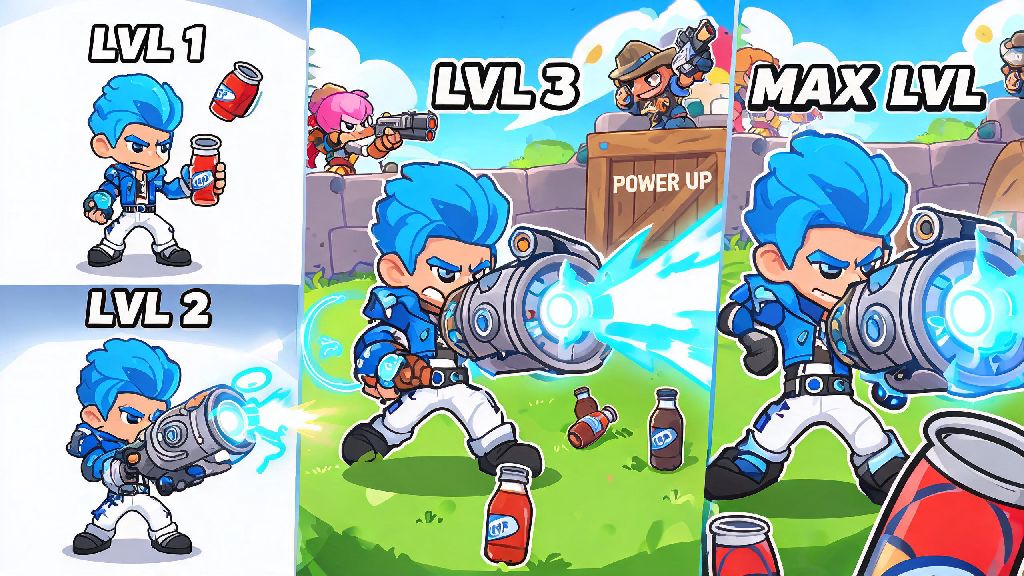
If you’ve ever unlocked Surge from a Brawl Pass or Starr Drop and immediately wondered is Surge good in Brawl Stars, you’re not alone. This quirky, soda-powered brawler has one of the most unique progression mechanics in the entire game, and his power level shifts drastically depending on how well you can level him up mid-match. I’ve been playing Surge on and off for three years, and I’ve seen him go from a S-tier must-pick to a niche situational pick and back again, depending on balance updates. In this guide, we’ll break down exactly when he’s worth picking, how to play him effectively, and when you’re better off swapping to another brawler.
Is Surge Good in Brawl Stars? Quick Tier Ranking Breakdown
If you’re still asking is Surge good in Brawl Stars after seeing his mixed community reception, the short answer is yes, if you play to his strengths. At his max level (level 4 in-match), Surge sits solidly in A-tier for most casual and competitive play. But the catch is he has one of the slowest early-game power curves of any brawler. If you can’t get eliminations or hits to level him up fast, he’s barely C-tier for the first half of a match.
His in-match level system works differently from regular brawler upgrades. Every 4 hits or 1 elimination on an enemy fills his level bar, and each level gives him permanent buffs for the rest of the match. Level 1 Surge has slow, low-damage projectiles that split into 4 small shots, no mobility, and barely enough health to survive two hits from a mid-range brawler. Level 2 gives him faster projectiles, level 3 unlocks his jump super, and level 4 makes his attack split into 6 shots instead of 4, with a 20% damage boost.
Surge is one of the best brawlers for controlling tight chokepoints once he’s maxed, because his split shots can hit multiple enemies at once and zone out pushes easily. He also performs really well in longer game modes where he has time to farm levels before critical team fights. You won’t see him banned in competitive play very often, but he’s a common pick for teams that want a flexible zoning option with good late-game carry potential.
Surge’s Biggest Strengths That Make Him Worth Picking
Another reason the answer to is Surge good in Brawl Stars is often yes is his versatility across team comps. Unlike many niche brawlers that only work with specific teammates, Surge fits well with almost any comp as long as you have at least one frontline brawler to protect him early game.
His split damage is his biggest selling point. Once he hits max level, a single well-placed shot can hit 3 or 4 grouped enemies at once, dealing up to 3000 damage per target. That makes him amazing for breaking down enemy pushes on chokepoint-heavy maps like Gem Grab’s Hard Rock Mine or Brawl Ball’s Pinhole Punt. He can melt entire teams in seconds if they’re stupid enough to cluster together in a narrow corridor.
His first Star Power, Power Surge, lets him knock back enemies when he uses his super, which is perfect for stopping aggressive pushes or saving yourself from assassins. If a Mortis or Buzz jumps on you, a quick jump back with Power Surge will knock them out of attack range, giving you time to land a few shots and take them out before they can get close again. His second Star Power, Serve Ice Cold, gives him a 40% shield for 3 seconds after using his super, which makes him way tankier than most ranged brawlers, letting him survive burst damage that would take out other squishy picks like Piper or Bea.
His Gadget, Cooler, is another game-changing tool. It instantly upgrades him one level, no hits or eliminations required. You can use it to jump straight to level 4 right before a big team fight, or get your mobility back immediately after respawning so you don’t leave your team short-handed during a push. He also has one of the highest damage outputs in the game at max level, letting him melt even 8000 health tanks like El Primo or Frank in 3 to 4 well-placed shots.
Situations Where Surge Is a Bad Pick (And Who to Swap For)
Just because we’ve established is Surge good in Brawl Stars in most situations doesn’t mean he’s a universal pick. There are plenty of maps, modes, and team comps where he’ll be more of a liability than an asset, and you’re better off picking a more consistent brawler instead.
Surge struggles a lot against long-range snipers like Piper or Brock, who can pick him off before he gets close enough to land hits and level up. On open maps with very little cover, you’ll spend most of the match hiding behind walls instead of farming levels, and by the time you get to level 3, your team might already be losing the match. He also struggles in very fast game modes where you don’t have time to farm levels before the match is decided.
If you find yourself in a situation where Surge isn’t a good fit, there are plenty of similar brawlers you can swap to. If you want a zoning brawler with consistent damage no matter the stage of the match, pick Jessie or Brock, both of which have great area control and no early-game power curve. If you want a mobile ranged brawler that can carry matches early on, pick Colt or Lola, both of which have high damage output and good mobility right from the start of the match.
Pro Tips to Make Surge Perform Better in Every Match
Even if you’re playing Surge on a perfect map with a good team comp, you can still underperform if you don’t play to his strengths. I’ve picked up a lot of small tricks over the years playing Surge that have helped me raise my win rate with him by almost 20%, and most of them are really easy to implement.
Always prioritize landing hits on low-health enemies early in the match to level up as fast as possible. Even if you don’t get the elimination, each hit gives you 25% of a level bar, so landing 4 hits gets you to level 2 without any kills. Don’t waste shots on full-health tanks early game, because you won’t do enough damage to take them out, and you’ll waste time that you could be using to farm levels on weaker enemies.
Save your Gadget for critical moments, not just to level up fast at the start of the match. I see a lot of new Surge players use their Cooler as soon as the match starts to get to level 2 immediately, but that’s a waste. Save it if you’re stuck at level 3 and need to get to level 4 right before a big team fight, or if you just respawned and need to get your mobility back fast to defend your team’s gem carrier or goal.
Use your super to reposition, not just to get kills. A lot of players only use Surge’s jump to chase low-health enemies, but it’s one of the best defensive tools in the game. If you’re getting pushed by a group of enemies, jump back to a safe position behind your frontline, and use your split shots to zone them out. If you’re playing Gem Grab and your team has 10 gems, you can use your jump to get out of the mine and hide behind your team’s spawn until the match ends, instead of risking getting picked off and losing all your gems.
When using your max-level split attack, aim slightly above or below enemies if they’re grouped up, so your split shots hit more targets instead of just the one you’re aiming at. That way you can get multiple eliminations or level up even faster, instead of wasting a shot on just one enemy. You should also always play around cover early game, don’t wander out into open areas where you can get picked off before you level up. Stick next to your team’s tank, let them take damage, and land hits on enemies from behind cover until you hit level 3 and have access to your mobility.
At the end of the day, the answer to is surge good in Brawl Stars depends entirely on the map, game mode, and team comp you’re playing with. If you have time to level him up and a team that can protect you early game, he’s one of the most powerful, fun brawlers you can pick, with the ability to carry entire matches once he hits max level. If you’re playing a fast mode or open map, you’re better off picking a brawler with a more consistent early game. Take the tips we covered here for a spin next time you pick Surge, and you’ll be dominating matches with him in no time.